Can AI Plan Deliveries Without Taking the Planner's Job?
Yes, when AI proposes and a person decides. The planning desk is where a distributor's day is won or lost, and most of that work is sorting: which stops go together, which windows are tight, which truck can carry the load. AI can do the sorting and flag the doubtful parts. The planner keeps the decision.
What Did Performance Food Group Say?
Distribution Strategy Group reported on November 17, 2026 that Performance Food Group is expanding AI across delivery routing, warehouse inventory and customer ordering. For routing, CEO Scott McPherson described AI-assisted tools aimed at fleet utilization and delivery efficiency, on the company's Nov. 4 earnings call.
The article is candid about the stage: McPherson said the company is early in the effort, sees early benefits, and has not separately quantified AI savings. That is the right posture for a smaller distributor too. Start with one desk, see what changes, then widen.
What Would a Diagnosis Look at First?
The large consulting firms publish use cases like this and then sell the assessment. Ours starts on site, with five questions:
Where is the plan built today? A spreadsheet, a routing tool, a whiteboard, one person's head. Each one has a different next step.
What does the planner know that no system does? The loading dock that floods, the customer who refuses afternoon drops. That knowledge needs a place to live.
Which routing tools do you already pay for? The first move is usually to extend them, not replace them.
When is the plan final, and who approves it? The proposal step must fit before that deadline.
What happens when a run changes after approval? If the answer is a phone call, the change needs a record.
What Does This Look Like in Mulstra?
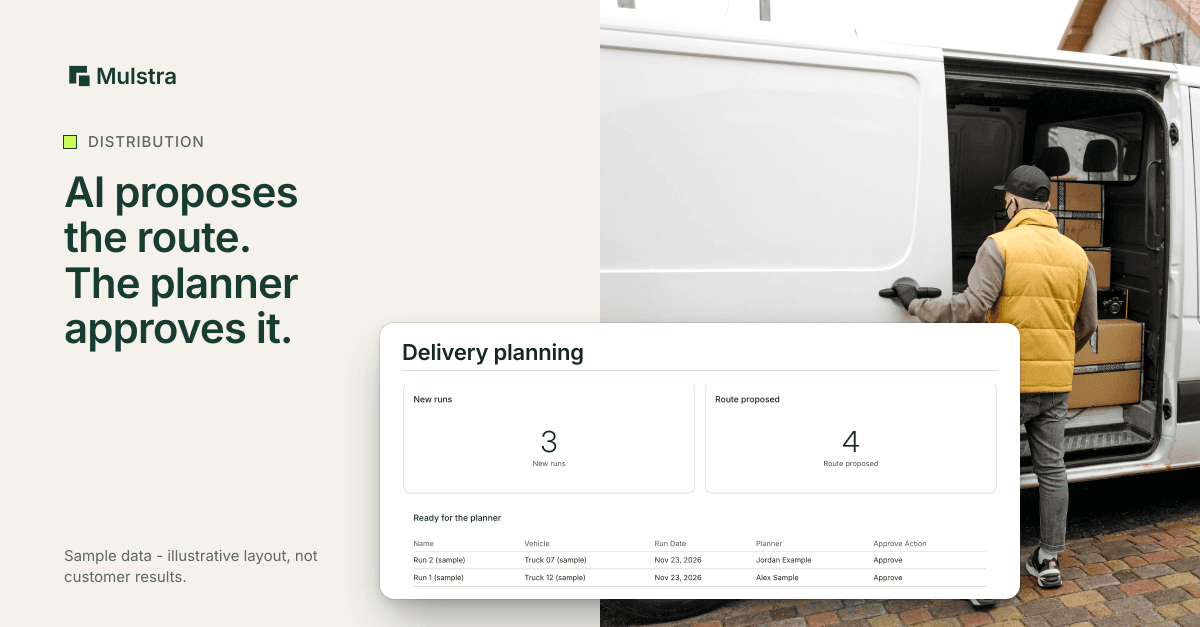
Here is the same setup, built in Mulstra with sample data. It proposes a stop order from delivery windows and zones. It does not replace a routing engine or calculate drive times, which is why the planner checks every run.
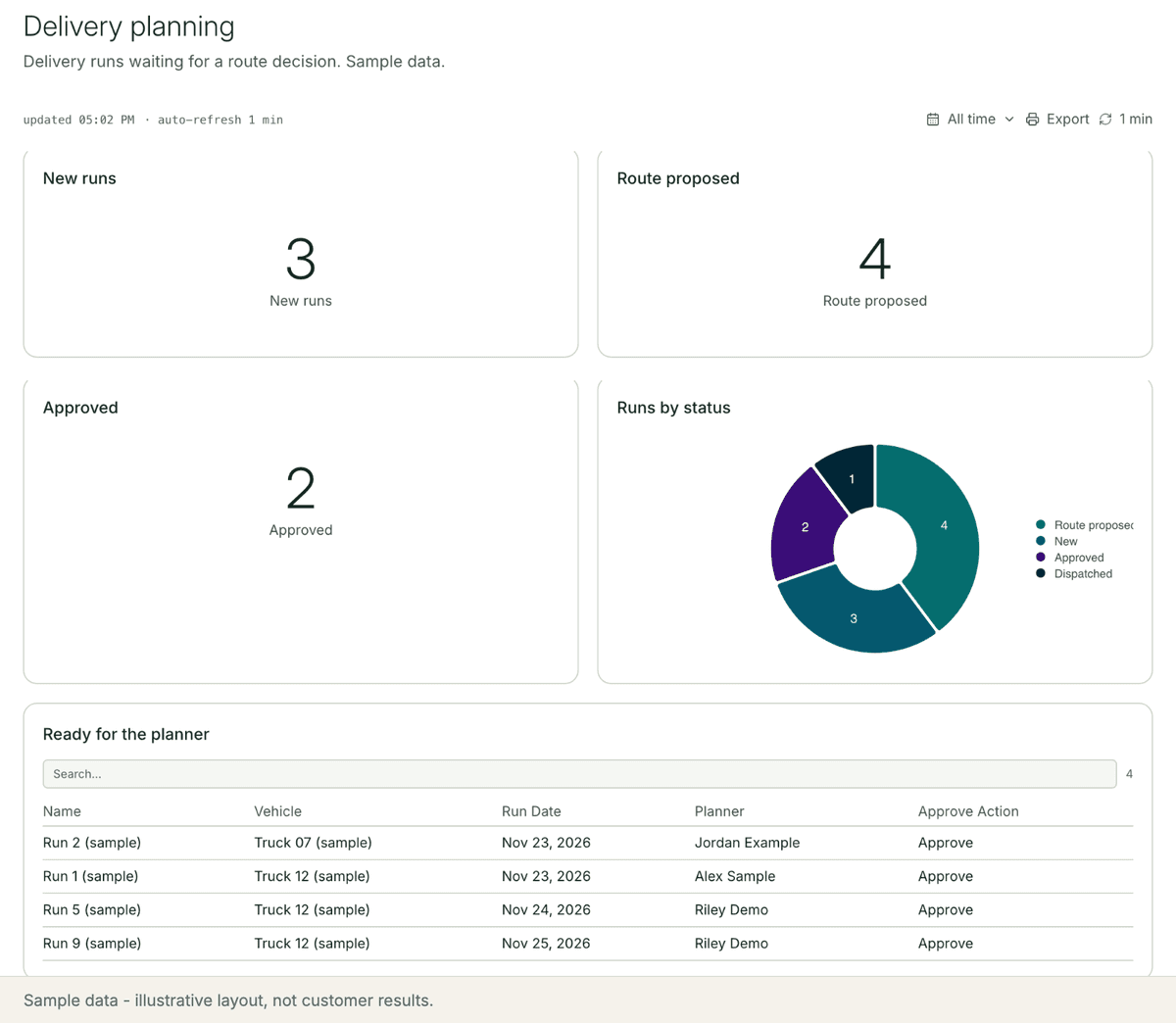
Each delivery run is a record with its stops, vehicle and date. A workflow runs when the record is created. AI proposes a stop order, grouped by zone and window, and writes a short list of things to check. The run moves to Route proposed.
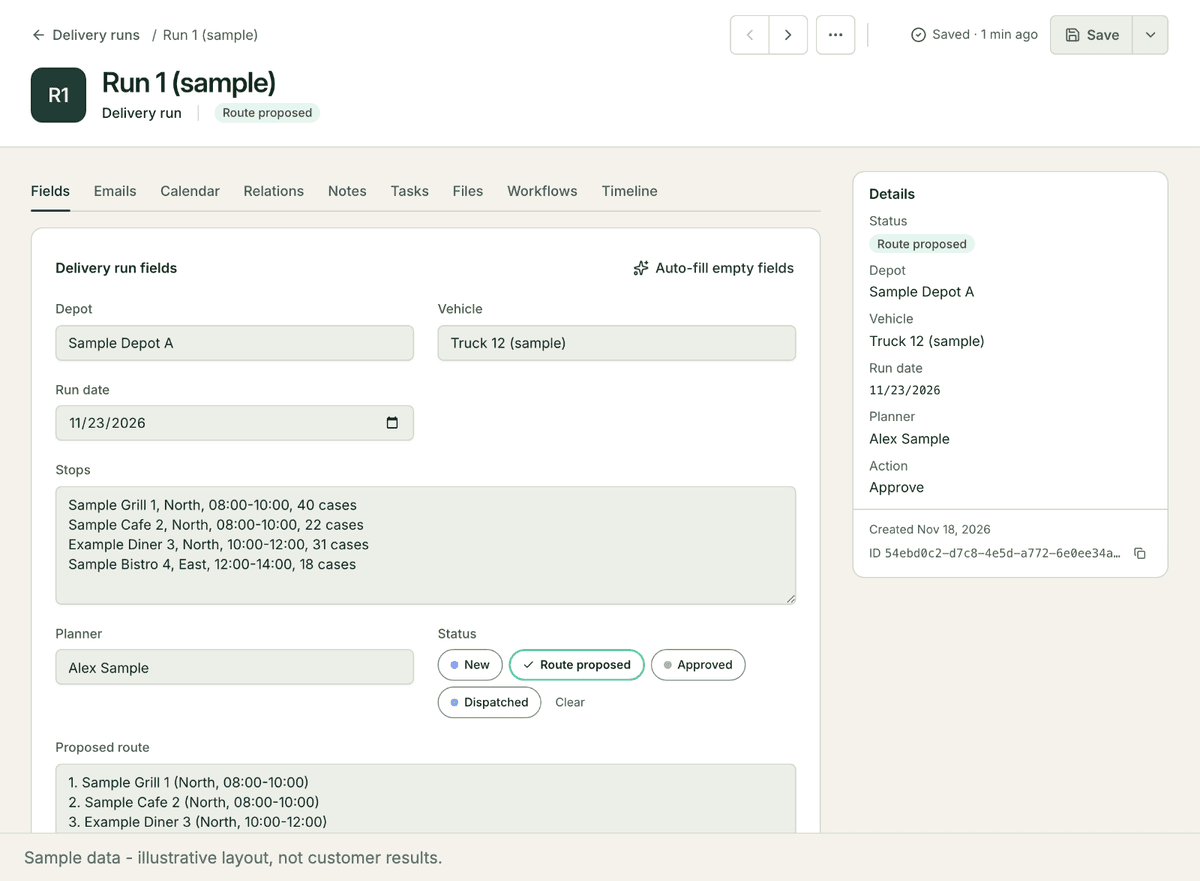
The planner opens the dashboard, reads the proposal, changes what needs changing and clicks Approve. Nothing reaches a driver until a person has approved it.
Can I Build the Proposal Step Myself With AI?
Yes. You need:
A run table with the date, vehicle, planner, a status and the list of stops.
A stop list that carries zone, delivery window and load for each stop.
A prompt that orders the stops by window, groups them by zone, flags mixed zones and heavy loads, and never guesses a drive time.
An approval the planner has to give before the run is released.
Start with last week's runs. Compare the proposals to the plans your planner actually released, and fix the prompt wherever they differ.
What Should the Proposal Never Do?
A route goes out with your trucks and your name on it, so write the limits before you build:
It never estimates distance or drive time. That belongs to a map or routing tool.
It never releases a run. Approval is a button a person presses.
It says what it could not judge. A missing window or an unknown zone becomes a flag, not a guess.
Start With a Free Diagnosis
If tomorrow's plan is still built by hand each evening, start with a free diagnosis. We look at where the plan is built, which of the tools you already pay for can carry the proposal step and where the approval belongs, then install what is missing and keep it running. More for distributors and fabricators: Mulstra for manufacturing. Book a free diagnosis.