
Shipment exceptions
Matches documents and messages to shipments, and gives every problem an owner.
Who it’s for: Operations managers and customer service leads
Illustrative sample. In a pilot, this comes from your own records.
Benefits
Every problem has an owner
Each exception is assigned and visible.
Updates drafted
The message to the customer is ready.
Status in one place
Staff answer from a single list instead of checking several.
By hand today
Staff match emails and documents to shipments by hand and answer status questions by checking several places.
What it does
What you’d share
- Shipment identifiers
- Bookings
- Authorized carrier events
- Customer documents
- Delivery commitments
What you get
An exceptions list where every problem has an owner and a drafted update.
Where we’d start
Start with one lane or customer and 50 recent shipments.
What we’d measure
- Exception response time
- Complete-document rate
- Manual status touches
Worth knowing
Public vessel schedules do not show private container holds or release data, so we need carrier or customer access.
Public data we can add
SC Ports vessel schedule
Related resources
Freight, moving and marine
4 min read
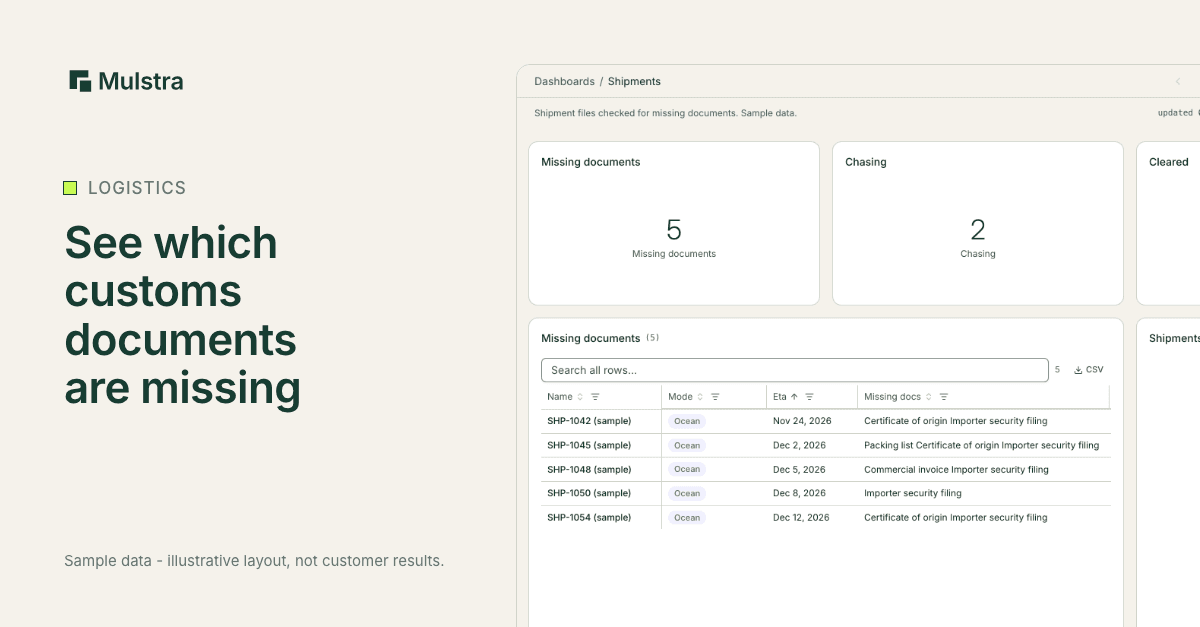
The Customs Paperwork Nobody Chases
Most customs holds start with one missing document. Here is how to build an AI check that flags what each shipment is missing and drafts the chase note for a person to send.
Freight, moving and marine
4 min read
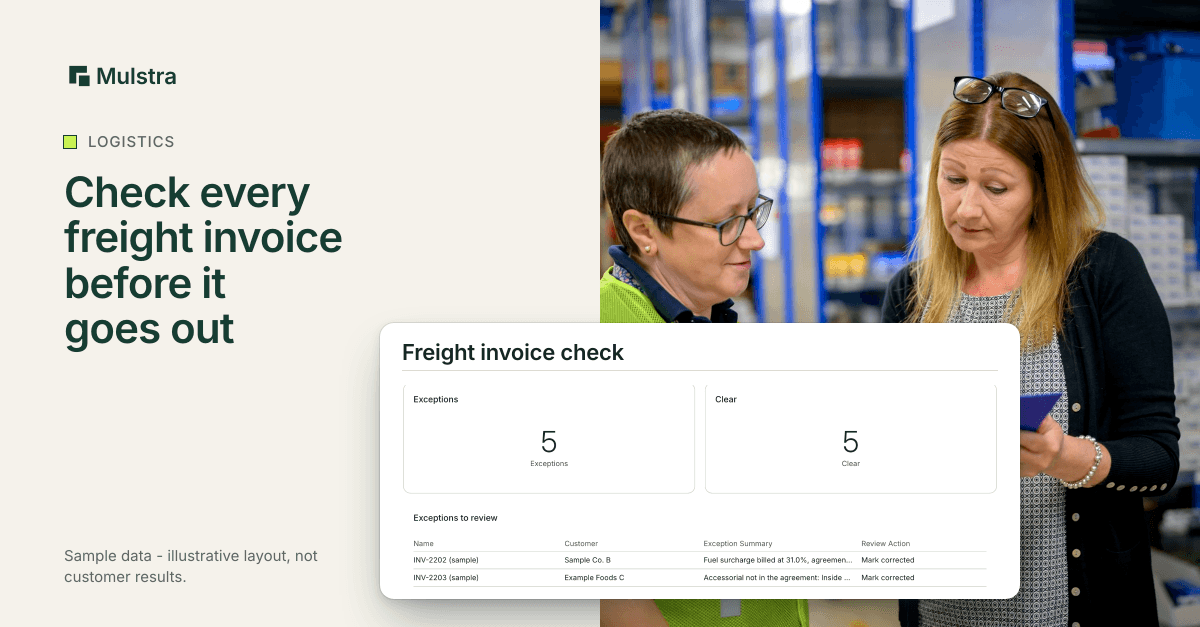
Check Freight Invoices Against the Contract Before They Go Out
J.B. Hunt now checks freight invoices against agreed terms before customers see them. Here is how to build the small version: a rule check, an AI evidence note and a person who decides.