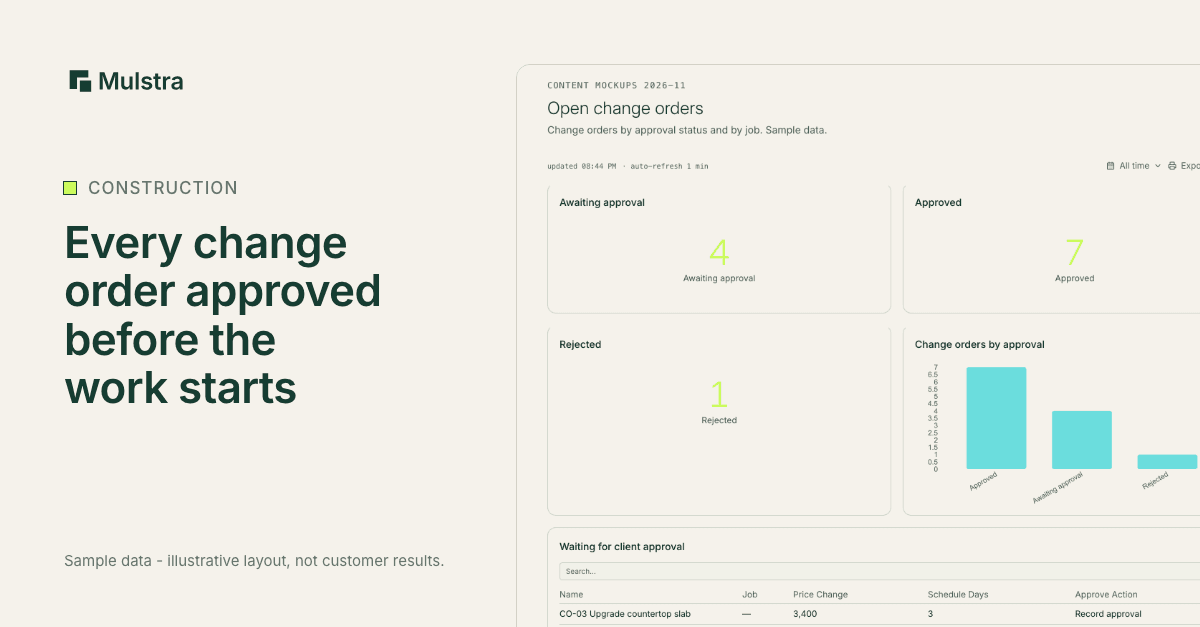
Change orders
Finds scope changes and promises in job emails and meeting notes, then drafts the change order.
Who it’s for: Owners and project executives
Illustrative sample. In a pilot, this comes from your own records.
Benefits
Signed before work starts
Each change has a drafted request ready before the crew begins.
Source attached
Every open change points to the email or note it came from.
No digging through emails
Promises are found in one list, not in job threads.
By hand today
Someone digs back through job emails and meeting notes to remember what was promised, then builds the change request from memory and a pile of attachments.
What it does
What you’d share
- Active job list
- Contracts
- Approved meeting notes
- Drawings
- Current change log
What you get
A list of open changes, each with a drafted change request and the source it came from.
Where we’d start
Start with one project team and its current open changes.
What we’d measure
- Time from spotting a change to submitting it
- Unresolved commitments
- Approved change value
Worth knowing
Your project manager stays the one who approves scope, price and contractual notices.